Print has its own vocabulary, and most of it exists for a practical reason. Here is the short version of everything you need to brief a printer properly.
Size, bleed and the safe area
The trim size is the finished piece. Bleed is 3mm of extra artwork past every edge, there because sheets are cut in stacks and the blade drifts by fractions of a millimetre. Without bleed, that drift shows as a white hairline. The safe area is 3 to 5mm inside the trim, where all your text should stay so the same drift does not clip it.
Colour: CMYK, not RGB
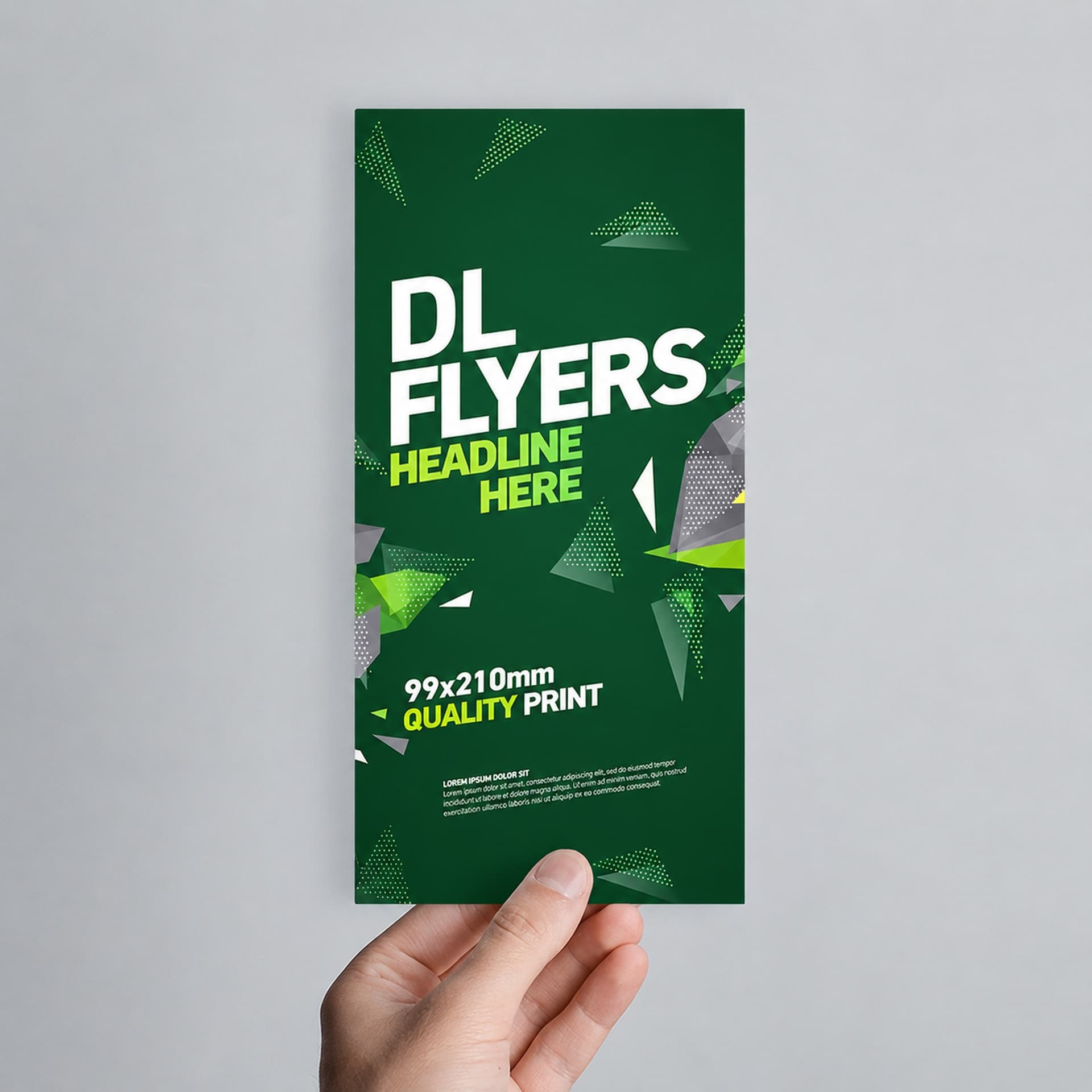
Screens make colour with red, green and blue light. Presses make it with cyan, magenta, yellow and black ink. Some screen colours, bright greens and electric blues especially, cannot be mixed from ink and will come out duller. Build artwork in CMYK from the start so you are looking at something close to the printed result. If a specific colour matters, say a brand colour, ask about it before you order rather than after.
Resolution: 300dpi at final size
Images need about 300 dots per inch at the size they will be printed. A photo that looks sharp on screen at 72dpi will look soft on paper. Enlarging a small image does not add detail. Logos are better as vector files, PDF, EPS or AI, because they stay sharp at any size.
Paper weight and finish
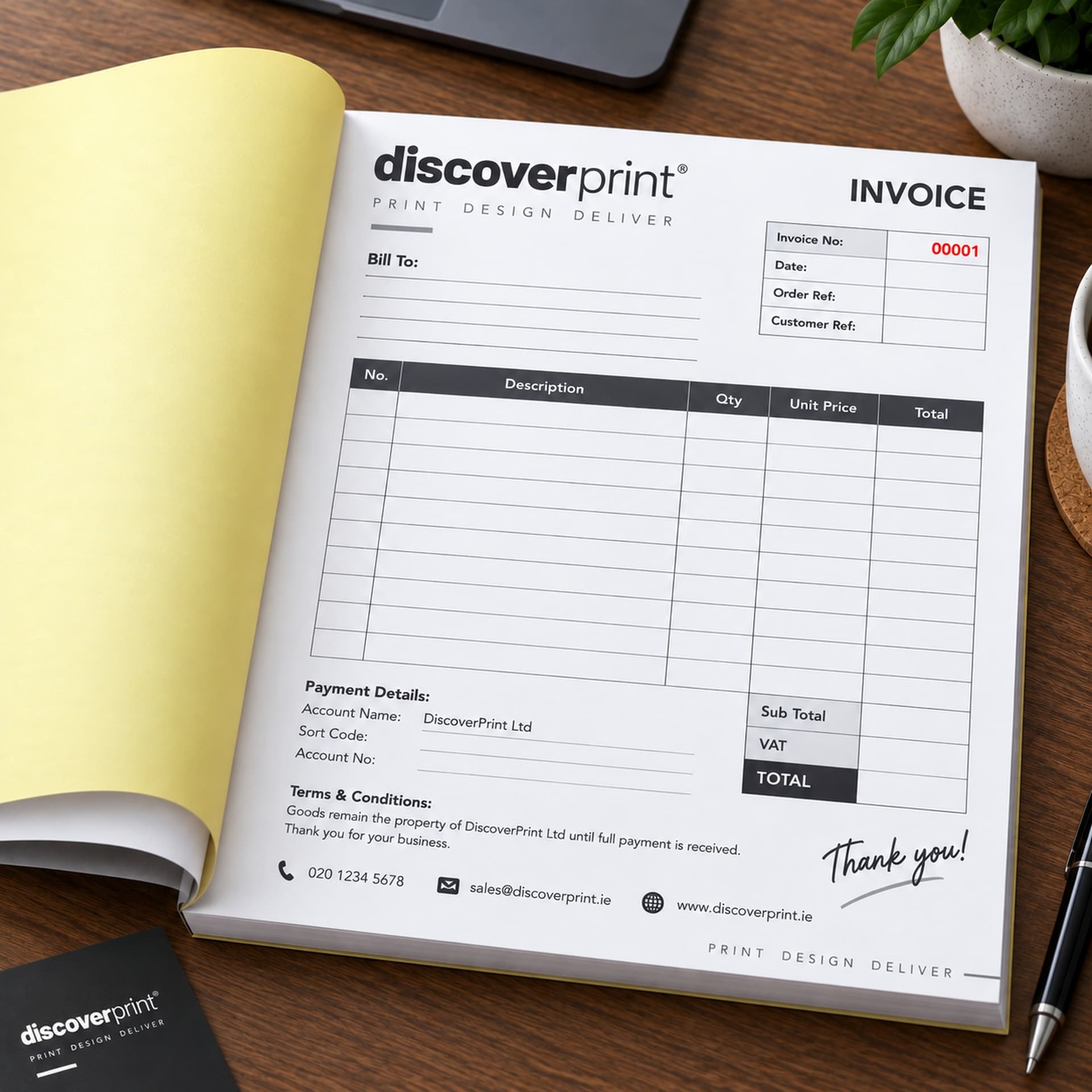
Weight is measured in gsm, and finish is gloss, silk or uncoated. Gloss lifts photographs, uncoated takes a pen. If people will write on it, choose uncoated. An A4 letterhead is printed on uncoated bond for exactly that reason. There is more detail in our guide to paper weights.
Litho or digital
Digital presses print straight from the file, with no setup, so they are the cheaper choice for short runs and the only sensible one if every copy needs to be different. Litho presses need plates making, which costs money once, and then print very cheaply per sheet. The crossover is usually somewhere in the high hundreds or low thousands, which is why the price per unit falls so sharply as your quantity goes up.
What to send
A print ready PDF: final size plus 3mm bleed, CMYK, 300dpi images, fonts embedded or converted to outlines, one page per side. If that is not something you can produce, send what you have. Our designers can set artwork for you, free on the NCR ranges and quoted with the job on anything else, and send a proof before anything is printed.
Read the proof properly
A proof is your last chance and it is worth ten minutes. Check the phone number digit by digit. Check the spelling of names and street names. Check the VAT number. Read it backwards if you have written the copy yourself, because you will otherwise read what you meant rather than what is there.
When you are ready, everything we print is listed on the all products page, from flyers and leaflets to books and banners, with prices shown before you order.