This article is general guidance for small fleets and owner-drivers. Check the current requirements for your vehicle types on the CVRT and RSA websites, which also publish sample check sheets for heavy goods vehicles, buses and light goods vehicles.
What the RSA and CVRT say
The RSA's commercial vehicle roadworthiness guidance, published through the CVRT website, sets out three points that shape any check sheet:
- The owner, user or driver of a commercial vehicle must ensure a walk-around inspection is carried out before the vehicle is used on a public road.
- For the check to be effective, there must be a system for reporting and recording defects.
- It is good practice to give drivers a book of check sheets and defect forms to record completed checks and any defects.
The same guidance says that when a defect is found, the record must include a description of the defect, the time and date it was discovered, and any temporary measure taken to reduce its effect. All reported defects must be followed up, and the corrective action recorded in the vehicle's maintenance record. If a defect is likely to be dangerous while driving, the driver should stop as soon as it is safe and not drive on until it has been inspected and, if necessary, repaired.
What to include on a walk-around check sheet
Header
- sheet number, printed
- vehicle registration, and trailer number if relevant
- date and time of the check
- driver's name
- odometer reading
Checklist
Adapt the list to your vehicle type, using the RSA sample sheets as a starting point. Typical items include:
- tyres, wheels and wheel nuts
- lights, indicators and reflectors
- mirrors, windscreen, wipers and washers
- brakes, and air leaks on air-braked vehicles
- fluid leaks under the vehicle
- body, doors, steps and load security
- coupling and trailer connections
- number plates, seat belts, horn and dashboard warning lights
Give each item a clear "OK" or "defect" box rather than a single tick, so an unchecked item is obvious.
Defect report
- description of the defect
- time and date found
- temporary measure taken
- whether the vehicle is safe to use, and who decided
- reported to, and when
Sign-off
- driver's signature
- a "nil defects" box, so a clean check is recorded as a check, not a blank
- space for the person who carries out or signs off the repair
How long to keep check sheets
Fleet guidance based on S.I. No. 348 of 2013 generally states that maintenance and defect records must be kept for at least two years and made available to RSA inspectors on request. Confirm the requirement for your operation with the RSA. Either way, a numbered book or pad makes it easy to show that no day's check is missing.
Why paper still works for vehicle checks
Apps are popular with larger fleets. Paper remains common with small operators because it needs no phone, signal or training, it sits in the cab, and a two-part set lets the driver keep one copy while the other goes to the transport office. It follows the same logic as a triplicate delivery docket, covered in What is a triplicate docket system?, and the same drivers often fill in delivery notes too: What should a delivery note include?
Pad or book?
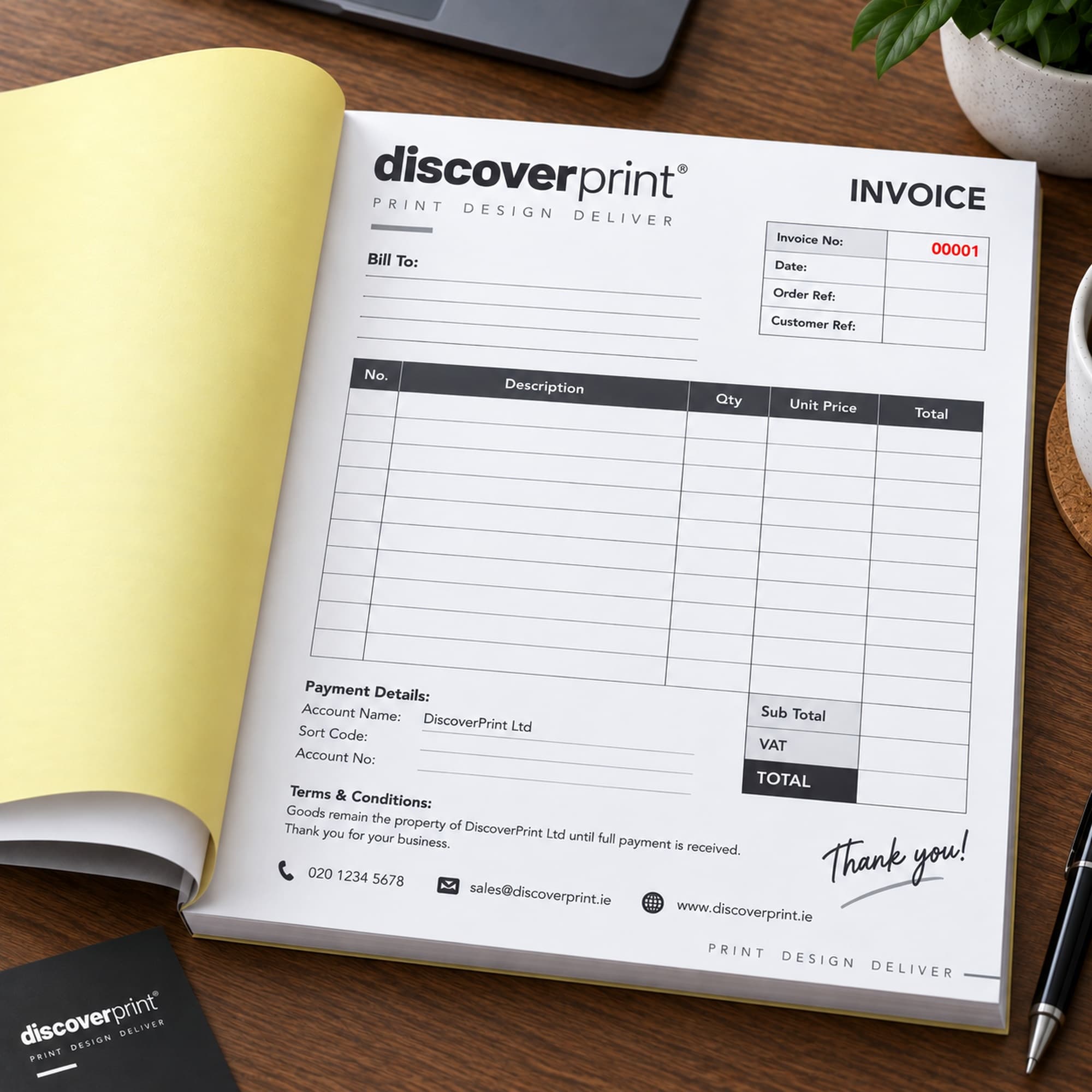
A book suits owner-drivers and vans that stay with one driver: the checks stay in order in the cab. A pad suits fleets where each day's sheet is torn off and handed in to the office for filing, with the numbering used to spot missing days. What are NCR pads, and how are they different from NCR books? explains the choice in more detail.
Walk-around check pads printed to your checklist
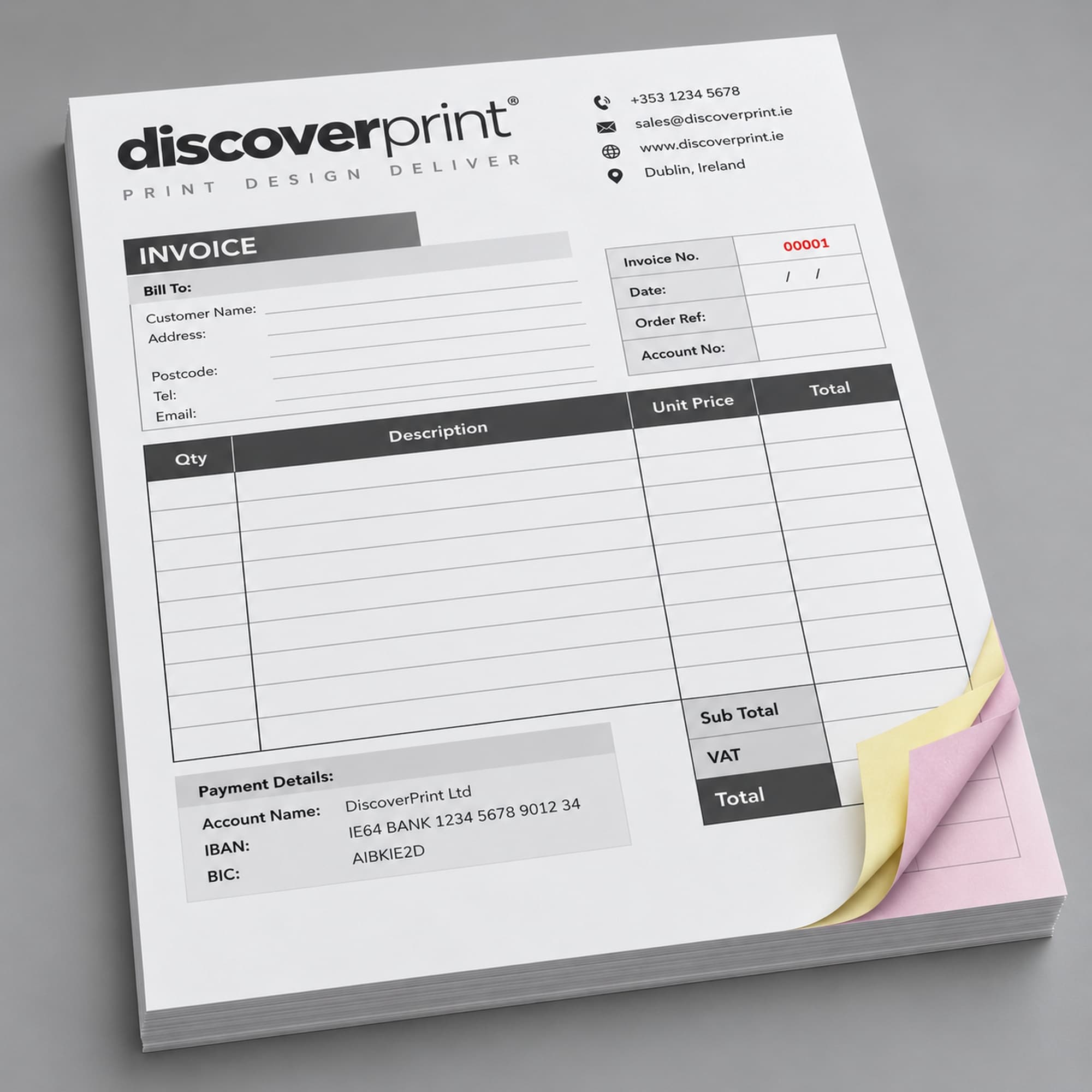
Discoverprint prints walk-around check sheets as NCR pads from your own checklist or one of the RSA sample layouts adapted to your vehicles, in A4, A5 or A6. Duplicate pads hold 100 sets and triplicate pads 50, numbered on every part and printed in black on 82gsm GiroForm carbonless paper. Design is free and delivery is free anywhere in Ireland. See the full NCR pads range.