Pads, books and loose sets compared
| NCR pad | NCR book | Loose sets | |
|---|---|---|---|
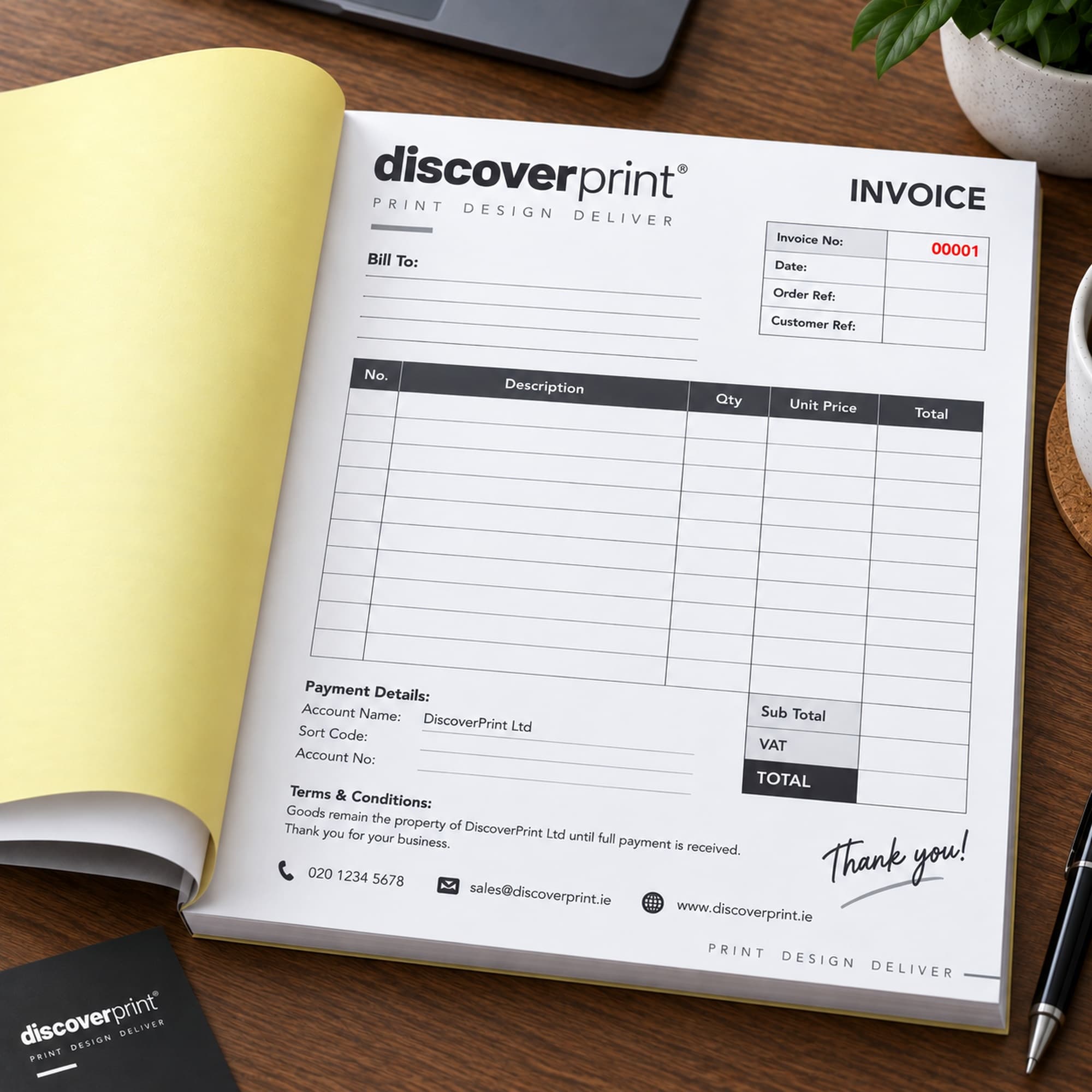
| How it is held together | Glued at the top to a backing board | Stitched or stapled with a taped spine | Each set glued as a single unit |
| What stays behind | Nothing; the whole set tears off | Your copy stays bound | Nothing |
| Perforation | Not needed | Yes, so copies tear out cleanly | Not needed |
| Best for | Counters and benches, forms that get filed | On-site invoicing, bound records | Forms fed through a printer or posted out |
What are NCR pads used for?
- Delivery notes, signed by the customer and left with the goods, with the other copy filed by customer. What should a delivery note include? covers the layout.
- Order forms and purchase orders at a trade counter.
- Job sheets and service reports, one copy for the customer and one for the file.
- Restaurant and café order pads, with a copy for the kitchen. See What size order pad works best for a café or restaurant?
- Vehicle check sheets, where each day's sheet goes to the transport office.
The common thread is that every copy goes somewhere else. If one copy should stay together with the others in number order, a book is the better choice. What is a docket book, and how is it different from an invoice or receipt book? covers the book side.
How a pad separates cleanly
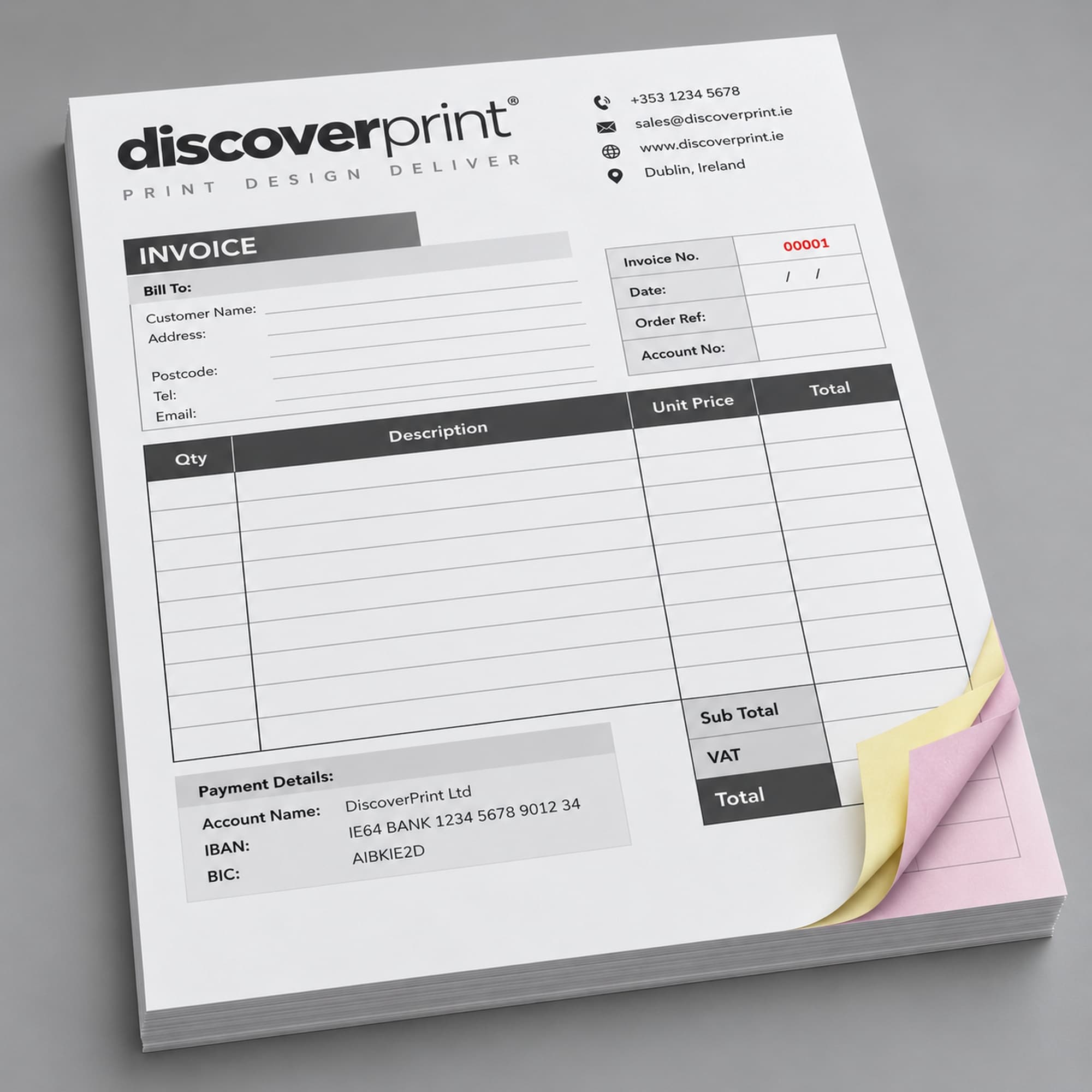
The glue along the top of an NCR pad is designed to hold each set together without sticking it to the next set, so one whole set lifts off at a time. The carbonless paper itself is made for this kind of gluing. How it works, and why home-made pads often fail, is explained in How do glued NCR pads separate?
Are NCR pads numbered?
They can be, and for most business forms they should be. Numbering lets you check that every delivery note or order form is accounted for, even though the copies are filed separately. The number is printed on every part of the set, so each copy can be matched to the others.
How to choose between a pad and a book
- Where will you write? On a counter or bench, a pad is quicker. On site or in a van, a book gives you a hard cover and keeps your copies safe.
- Where do the copies go? If all copies leave the pad to be filed or handed out, choose a pad. If you need one copy kept in order, choose a book.
- Who checks the sequence? A book shows gaps at a glance. With pads, someone needs to check the filed copies in number order.
NCR pads printed with your form
Discoverprint's NCR pads are printed on 82gsm GiroForm carbonless paper, glued along the top edge to a strawboard back with a white card cover, in A4, A5 or A6. Duplicate pads hold 100 sets and triplicate pads hold 50, printed in black with your details, headings and boxes, and numbered on every part if you want. One-part desk pads on 120gsm bond are available on request. Pads are dispatched 5 to 6 working days after proof approval, with free delivery anywhere in Ireland. See the full NCR pads range.