The difference sounds like paperwork, but it is behind a large share of disputes between tradespeople and customers. A customer who thought they had a quote and receives a bigger invoice feels misled. A tradesperson who gave an estimate and meets unexpected work feels the customer is being unreasonable. Getting the words and the paperwork right avoids both.
What the CCPC tells customers
The Competition and Consumer Protection Commission's advice to people hiring a tradesperson is direct. It describes an estimate as an educated guess with no legal standing, where the price can rise during the job, and it describes a written quote as binding so long as the customer does not change the job's requirements. It also advises consumers to get three quotes and to use a contract.
For car servicing and repairs, the CCPC goes further. It tells consumers to ask for a detailed written quote before work begins, broken down by labour and parts and including VAT, and says that if the total cannot be given upfront, the garage must explain how the price will be calculated. We apply that to garage paperwork in What should a mechanic's job sheet include?
In other words, your customers are being told to expect a written quote. Being ready to give one is part of looking professional.
Quote, estimate and invoice side by side
| Quote | Estimate | Invoice | |
|---|---|---|---|
| When | Before work starts | Before work starts | After supply, or at stages |
| Price | Fixed for the job described | Approximate, can change | The amount now due |
| Binding? | Yes, if accepted and the job does not change | No legal standing, per CCPC | Records the debt |
| VAT details | Say whether VAT is included | Say whether VAT is included | Full VAT breakdown on a VAT invoice |
When to give an estimate
Estimates are honest when you genuinely cannot see the whole job: a leak behind tiles, a rewire in an old house, a car fault that needs stripping down. If you give one, write the word "Estimate" clearly, explain what could change the price, and agree that you will contact the customer before going over a set figure. That last step does more to prevent disputes than anything else.
What a written quote should include
- your business name, address, phone and VAT number if registered
- a quote number and the date
- the customer's name and address, and the job address if different
- a clear description of the work, including what is not included
- the price, broken down by labour and materials where practical
- whether the price includes VAT
- how long the quote is valid, such as 30 days
- payment terms, including any deposit
- a line for the customer to sign and date to accept
A signed acceptance line makes a quote clear evidence of what was agreed. If the customer later asks for extra work, write it up as a separate quote or a variation before you do it.
From quote to invoice
When the job is done, the invoice should refer to the quote number, so both sides can see they match. If the price changed because the customer added work, show the extras as separate lines. If you are VAT registered, the invoice must carry the full VAT details, which are listed in Are handwritten invoices legal in Ireland? Print your payment terms on it too, as covered in How long does a customer have to pay an invoice in Ireland?
Why two books work better than one
Some trades use one book for both, crossing out "Invoice" and writing "Quote". It works, but it causes three problems:
- Gaps in the invoice sequence. Every quote uses up an invoice number. Quotes that are never accepted leave gaps an accountant has to make sense of.
- Confusion for customers. A form headed "Invoice" with a price on it can look like a demand for payment.
- Lost quotes. Months later, finding the quote for a job means searching through invoices.
A separate quotation book, with its own number sequence and "Quotation" printed at the top, solves all three. Many customers match the design to their invoice book so both look the same, just with a different heading and a signature line for acceptance.
Quotation and invoice books that match
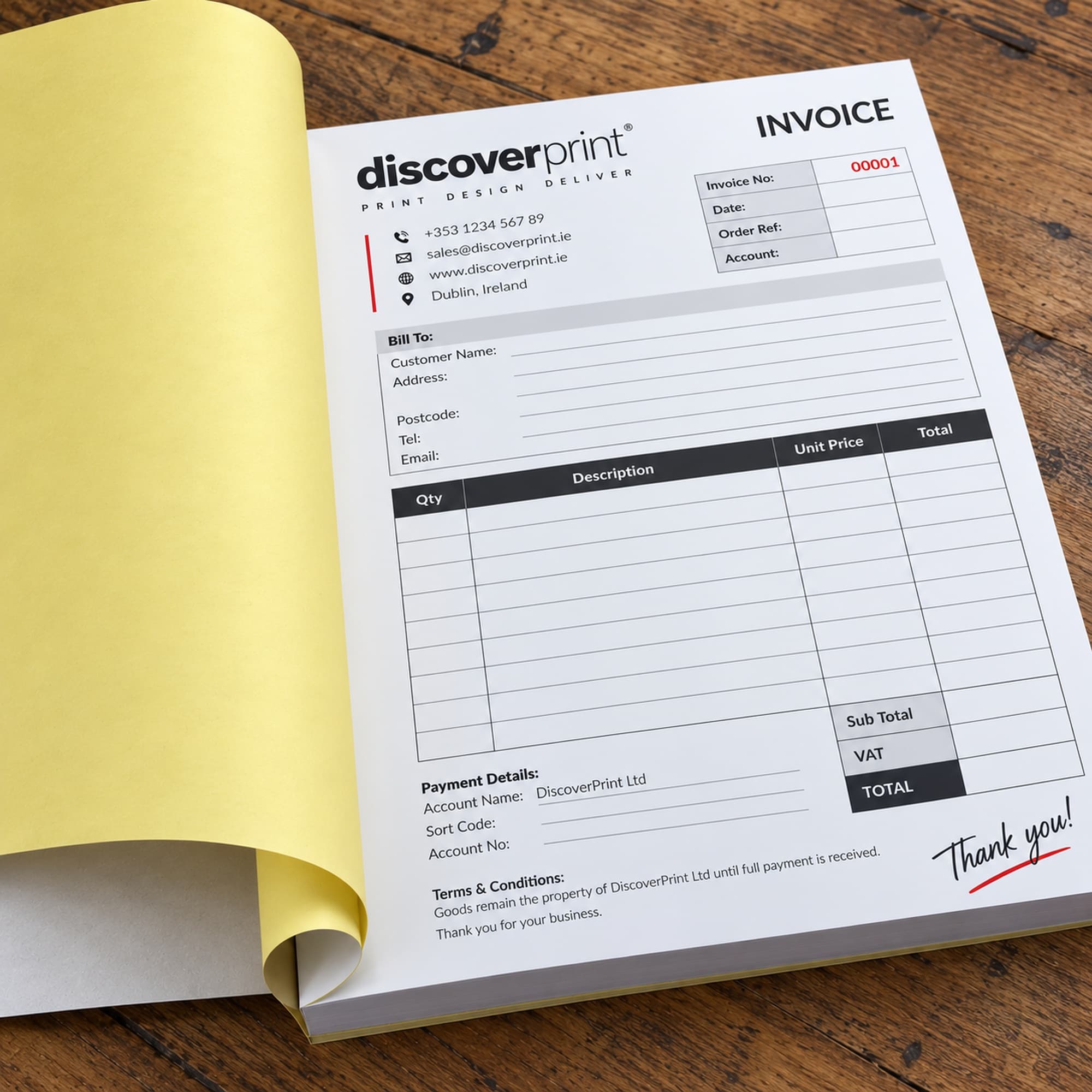
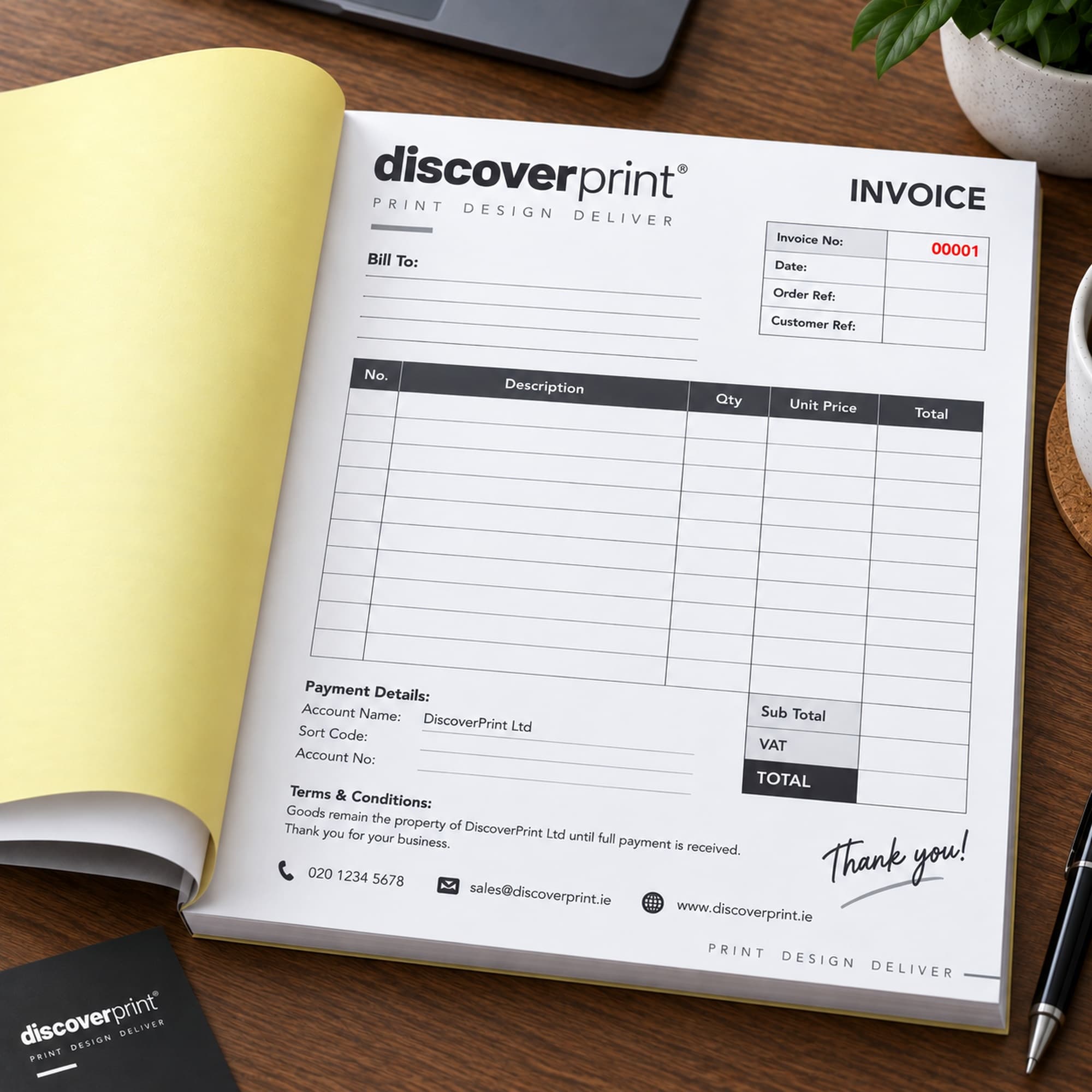
Discoverprint prints quotation books and invoice books from the same design, each with its own heading and number sequence. Our duplicate invoice books hold 100 sets each in A4, A5, A6 or DL, and the same layout can be set up as a quotation book with an acceptance line. Design is free on NCR books, and delivery is free anywhere in Ireland. See the full NCR books range.