Why two-part order pads help
- One writing, two records. The kitchen and front of house hold the same order, so there is no rewriting and nothing lost in translation.
- Settling queries. When a table says they ordered something different, the server's copy shows what was taken down.
- Billing. The server's copy can go to the till to build the bill, especially useful when the till system is down. What should you do when the card machine or till goes down? covers that situation.
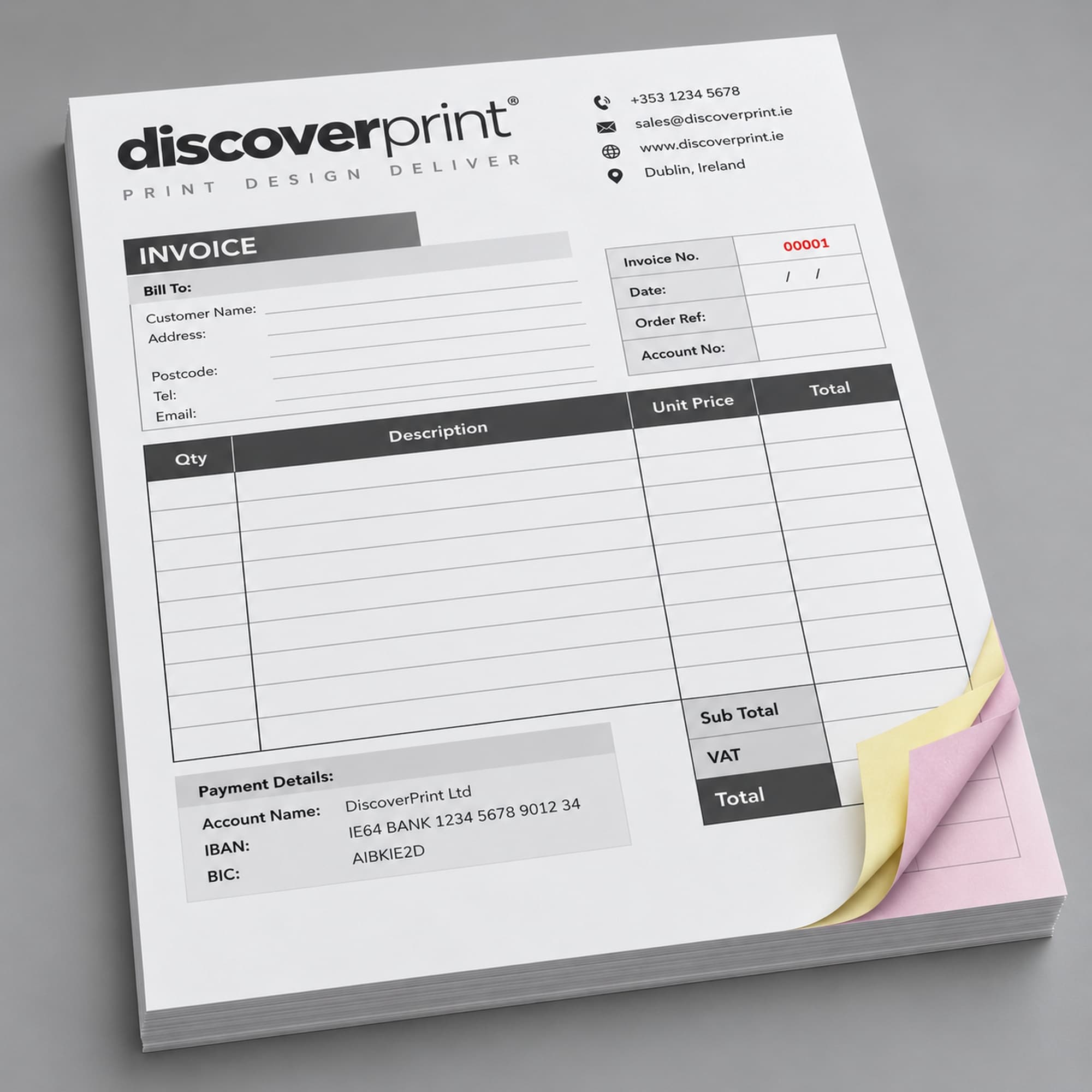
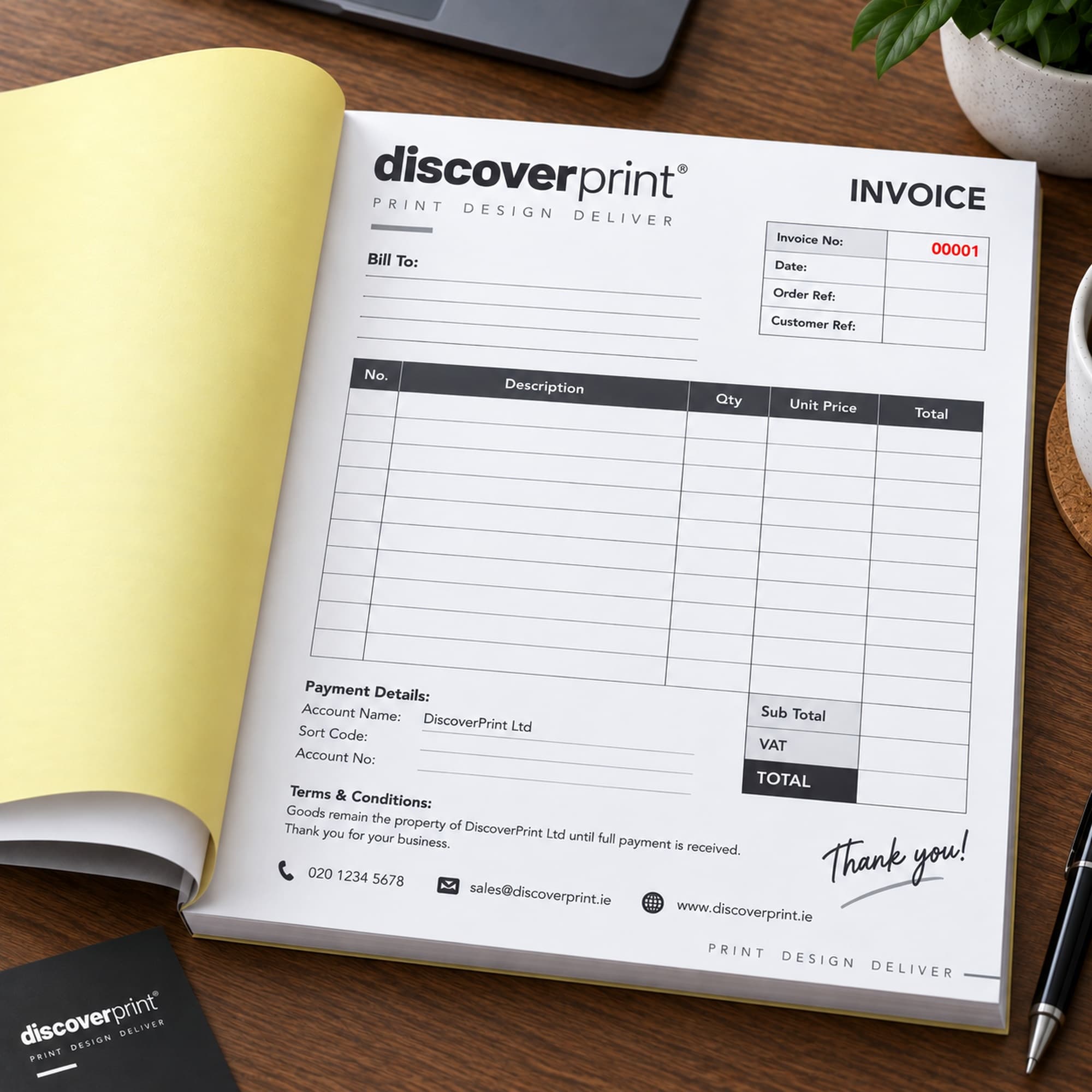
Most restaurants and cafés only need two parts. A third part is worth it if a separate station, such as a bar or a pizza oven, needs its own ticket.
What to print on a restaurant order pad
| Box | Why it matters |
|---|---|
| Pad number (printed) | Matches kitchen and server copies |
| Table number and covers | Gets food to the right table in the right quantity |
| Server name and time | Shows who took the order and when |
| Items, with space for modifications | "No onion", "sauce on side" need room |
| Allergy and dietary box, clearly marked | Makes allergy requests impossible to miss in the kitchen |
| Course or timing notes | Starters now, mains later |
Keep the layout simple. A crowded form is slow to fill in during a busy service. Leave the top 15mm clear, because that is where the pad is glued.
Allergy notes and the FSAI rules
In Ireland, food businesses selling non-prepacked food, which includes meals in restaurants, cafés and takeaways, must provide information about the 14 regulated allergens in writing. The FSAI says it must be easy to find and available before the food is sold, so customers do not have to ask for it. That information lives on your menu, a chart or another written format, not on the order pad.
The FSAI also advises customers with a food allergy to discuss their needs with staff. That conversation is where the order pad earns its place: a clearly printed allergy box, filled in at the table, means the request arrives in the kitchen in writing rather than as a shouted reminder. Many kitchens also ask staff to tell the chef in person when that box is filled in.
Pads or books for waiting staff?
Pads. Order tickets are torn off whole and go in different directions, which is exactly what a glued pad is designed for. Books suit records you want to keep bound, such as invoices. What are NCR pads, and how are they different from NCR books? explains the difference, and How do glued NCR pads separate? shows how to tear sets off cleanly in a hurry.
Numbered or plain?
Numbering is worth having if you want to match kitchen tickets to bills or check that no orders went unbilled. It is included in the price of our pads, so there is no saving in leaving it off.
Order pads printed for your restaurant
Discoverprint prints restaurant and café order pads as NCR pads on 82gsm GiroForm carbonless paper, glued at the top to a strawboard back, in A6, A5 or A4. Duplicate pads hold 100 sets and triplicate pads hold 50, printed in black with your name and layout, including a table box and a clearly marked allergy box, and numbered if you want. Design is free and delivery is free anywhere in Ireland. See the full NCR pads range.