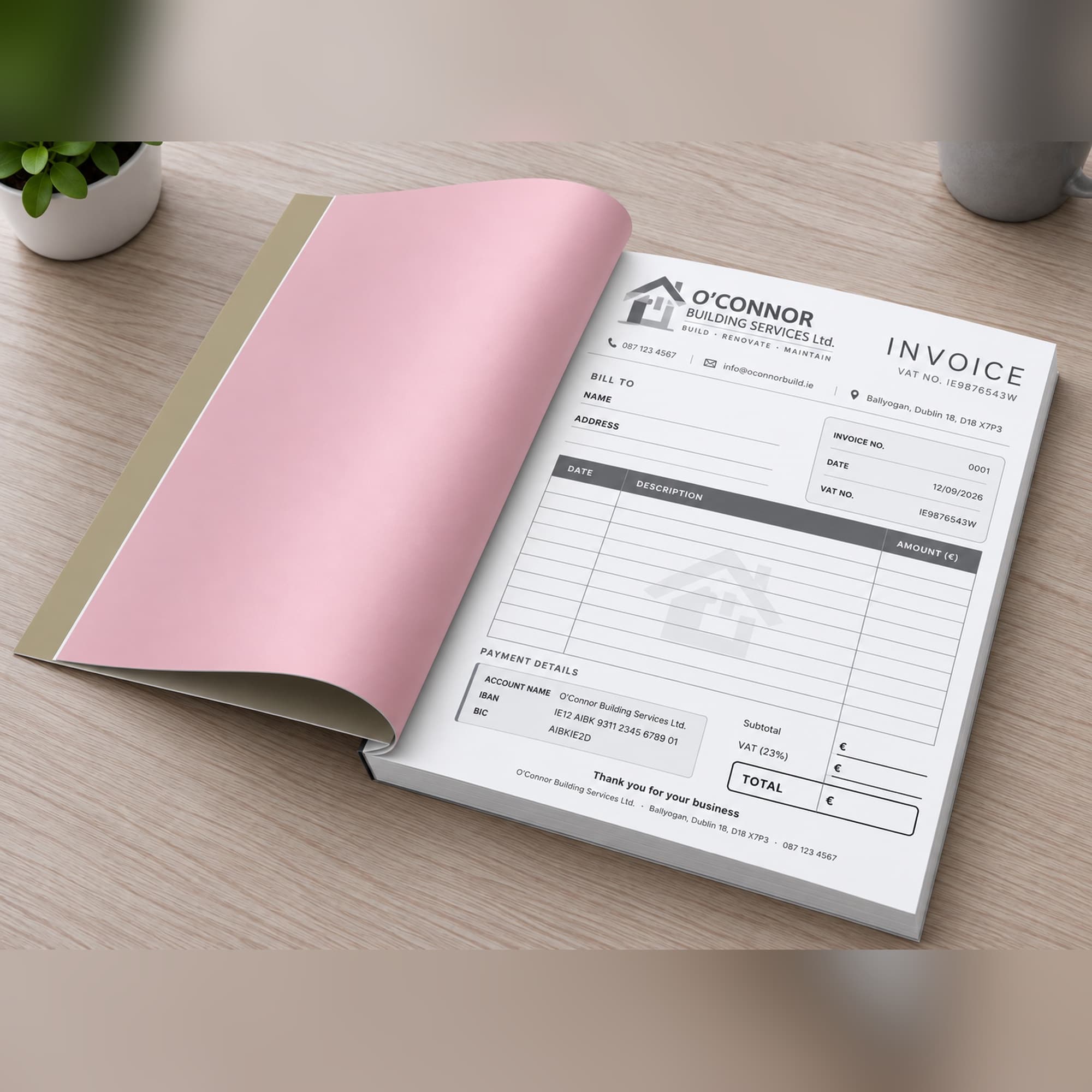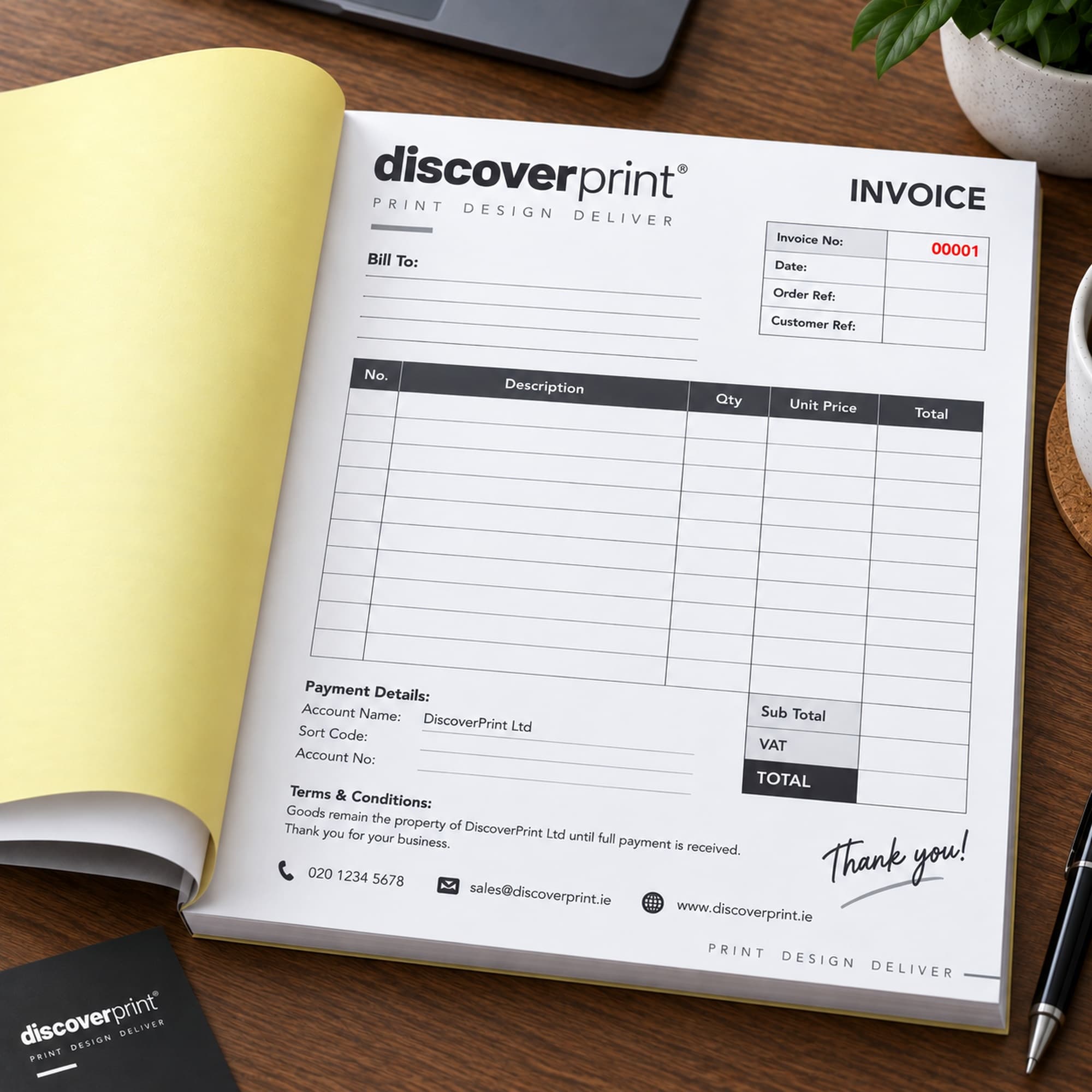
If you have ever been handed a slip at a builders' merchant, signed for a pallet of stock or paid a mechanic in cash, you have almost certainly been given a docket. This guide explains what the word means, what belongs on one, and how to decide between a docket book, an invoice book and a receipt book when you order.
What does "docket" mean in Ireland?
A docket is a short written record of a transaction. The word is used much more in Ireland than in Britain, where people are more likely to say "delivery note" or "chit". Irish businesses use it for several different forms:
- Sales dockets, written at a counter or on site to record what a customer bought.
- Delivery dockets, signed by whoever receives goods.
- Job dockets or job sheets, recording work carried out, hours and materials.
- Daywork dockets, used in construction to record labour and plant on a daily rate.
Revenue uses the same word. Its guidance on VAT sales records lists sales dockets, sales receipts and delivery notes among the documents a VAT-registered business should keep to support its sales figures. In other words, a docket is not just a piece of paper for the customer. For many small businesses the retained copy is part of the accounting record.
What goes on a docket?
There is no single legal format for a docket, because it depends on what the docket is for. Most good dockets share the same core details:
- your business name, address and phone number, printed so nobody has to write them
- a unique number, printed in sequence
- the date, and the time if deliveries or call-outs matter
- the customer's name and address
- a description of the goods or work, with quantities
- prices and a total, if money changes hands
- a signature line, and a printed name line under it
If the docket will also serve as a VAT invoice, it needs everything Revenue lists for a VAT invoice, including your VAT number, the VAT rate and the amount of VAT. We cover that in detail in Are handwritten invoices legal in Ireland?
Docket book, invoice book or receipt book: what is the difference?
All three are made the same way: carbonless paper, numbered sets, a cover and a writing shield. What changes is the purpose of the form and so the wording on it.
| Book | What the form does | Typical users |
|---|---|---|
| Docket book | Records a sale, job or delivery as it happens | Builders' merchants, hauliers, plant hire, trade counters |
| Invoice book | Asks the customer to pay, and shows what is owed | Plumbers, electricians, garages, landscapers |
| Receipt book | Confirms that money has been received | Clubs, tutors, landlords, market traders |
In practice the lines blur. A plumber's "docket" often carries a price, VAT and a total, so it is doing the job of an invoice. A shop's "docket" may simply be a receipt. What matters is that the form you print suits what you need to write, and that the retained copy gives you a clean record. If you are unsure whether you need an invoice or a receipt, read What is the difference between a receipt book and an invoice book?
How do you use a docket book?
- Slide the writing shield (the stiff card that comes with the book) under the set you are about to use, so the pressure does not mark the sets underneath.
- Write the details with a ballpoint pen and press firmly.
- Get a signature if the docket records a delivery or approved work.
- Tear out the top copy along the perforation and hand it over.
- Leave the copy in the book. That is your record.
Never tear out a spoiled docket and throw it away. Mark both copies "cancelled" and leave them in place, so the numbering has no unexplained gaps.
Book or pad for dockets?
Most dockets are best kept in a bound book, because the copies stay together in number order and are hard to lose. Some businesses prefer glued pads instead, where the whole set tears off and the copies are filed separately, for example a trade counter that files delivery dockets by customer. The difference is explained in What are NCR pads, and how are they different from NCR books?
Which size docket book should you choose?
- A4 (210mm x 297mm) for dockets with many lines, such as materials lists or itemised deliveries.
- A5 (148mm x 210mm) for most trades. It has room for six to ten lines and fits a van door pocket.
- A6 (105mm x 148mm) for pocket dockets and short cash sales.
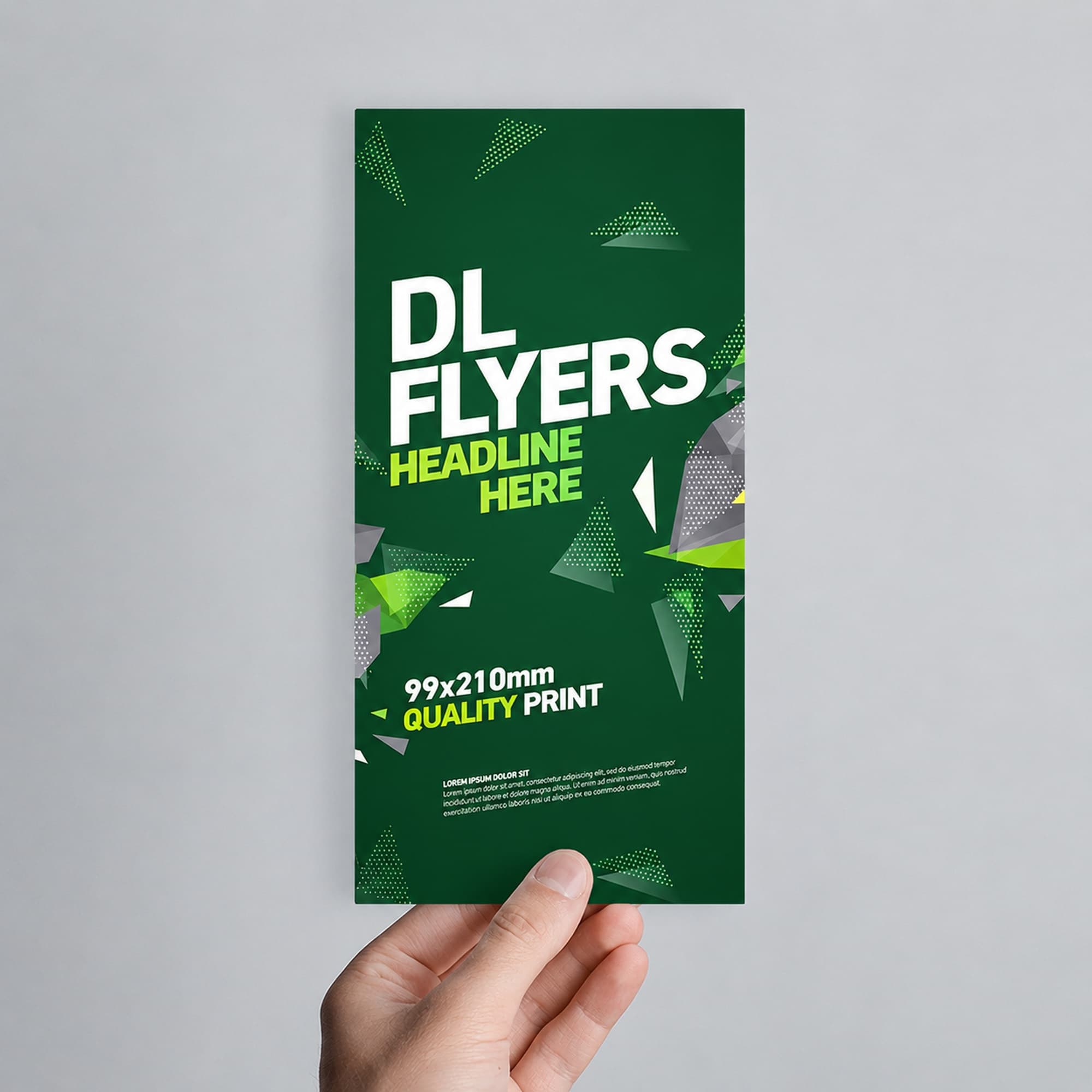
- DL (99mm x 210mm) for a tall, narrow slip with one or two lines and a total.
Do you need two copies or three?
Two copies (duplicate) suit most businesses: one for the customer, one for the book. Three copies (triplicate) make sense when a third person needs the paperwork, such as the office, a driver or your accounts. Hauliers and plant hire firms often use three-part delivery dockets for exactly that reason, which we explain in What is proof of delivery, and what should a delivery docket show? The same logic applies to vehicle check sheets, covered in What should a vehicle walk-around check sheet include?
Where can you get docket books printed in Ireland?
Discoverprint, a print company in Santry, Dublin, prints docket books in A4, A5, A6 and DL, as duplicate books with 100 sets or triplicate books with 50 sets, numbered in sequence on every part and perforated at the top or the left. If you already have a docket you like, you can upload your own docket design or send a photograph of your current book and our designers will recreate it at no charge. A proof is emailed within one working day, books are dispatched 3 to 4 working days after you approve it, and delivery is free anywhere in Ireland, north and south. You can see every size and format in our NCR books range.