The difference in one table
| Invoice | Receipt | |
|---|---|---|
| What it says | "This is what you owe" | "This is what you paid" |
| When it is written | When goods or services are supplied | When money changes hands |
| Typical wording | Description, quantity, price, VAT, total, payment terms | Received from, the sum of, being payment for, method, signed |
| Legal detail | VAT invoices must show set details, listed by Revenue | No fixed format for private sales |
| Main users | Trades, garages, suppliers, anyone invoicing businesses | Clubs, tutors, landlords, cash sales, deposits |
When you need an invoice
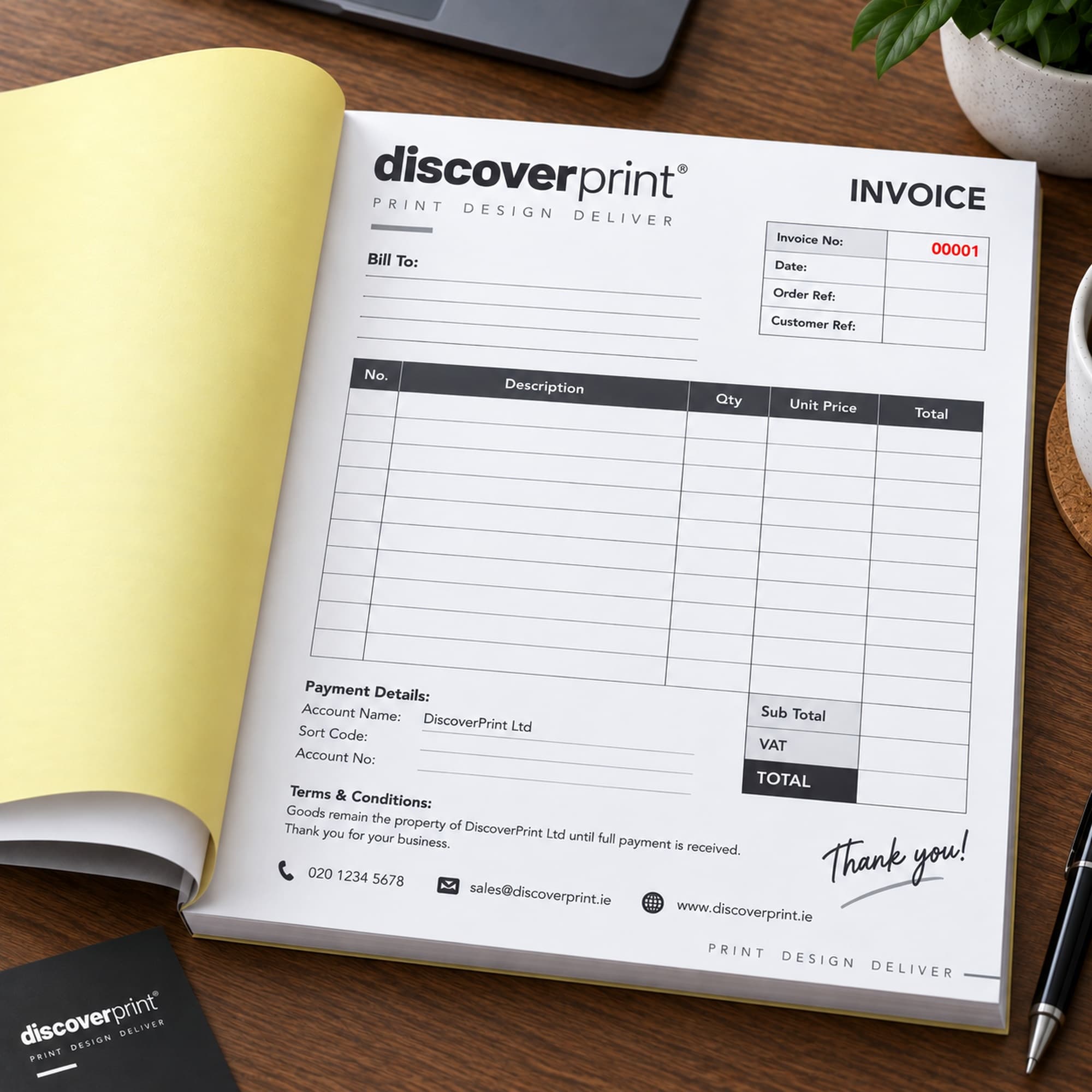
If you are VAT registered, Revenue requires a VAT invoice when you supply another VAT-registered business, a government department, a local authority or statutory body, a business carrying on an exempt activity, or a business in another EU country. A receipt does not replace that. The full list of what a VAT invoice must show is in Are handwritten invoices legal in Ireland?
For small sales, Revenue allows a simplified invoice where the amount is not more than €100. It needs only the date, your name, address and VAT number, a description, and the VAT or the price excluding VAT. Many counter businesses use a small A6 form for these.
When you need a receipt
Receipts matter most where money is paid in person and there is no other paper trail:
- Clubs and societies collecting membership fees, lotto money or subs. See How should a club, school or charity record cash payments?
- Tutors, coaches and childminders paid weekly in cash.
- Landlords recording rent or deposits paid in person.
- Trades taking a deposit before starting a job.
- Market and fair traders with no till.
Revenue also lists sales receipts among the documents that support a VAT-registered business's sales records, so your retained copies are part of your books, not just a courtesy to the customer.
What should a receipt show?
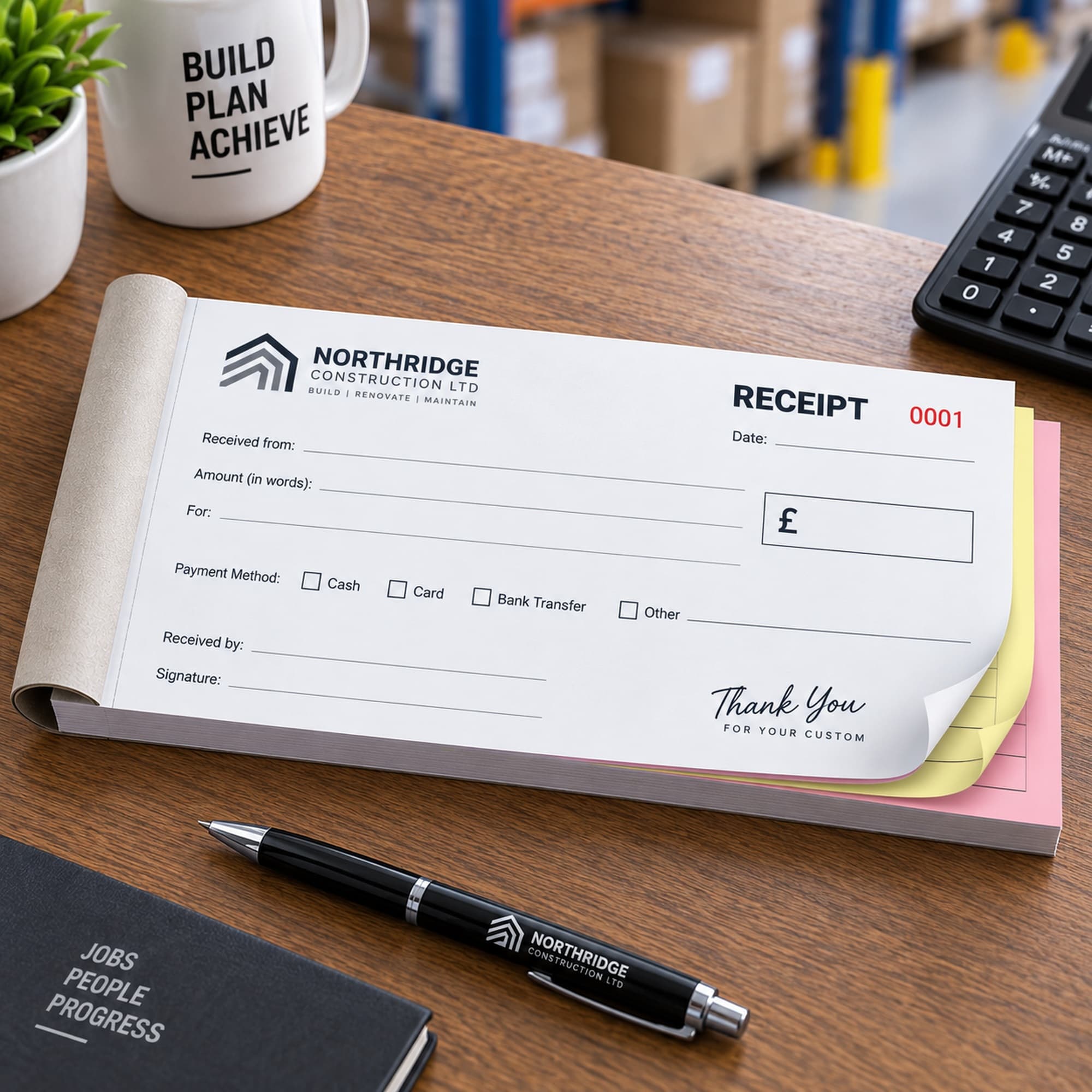
- your name or business name and contact details
- a receipt number, printed in sequence
- the date
- "Received from" with the payer's name
- the amount in figures, and ideally in words
- what the payment was for
- how it was paid: cash, card, cheque or transfer
- your signature
Writing the amount in words as well as figures ("one hundred and twenty euro") makes it much harder for a receipt to be altered afterwards. How a receipt book works in practice is covered in How does a receipt book work, and how many receipts are in one?
Can one book do both jobs?
Yes, and many small businesses do exactly that. A form headed "Invoice / Receipt" with a "Paid" box and a payment method line lets you issue the invoice and confirm payment on the same sheet, when the customer pays on the day.
Keep separate books if you usually invoice first and get paid later. Otherwise you end up with invoices and receipts sharing one number sequence, which makes both harder to follow.
What about a docket book?
"Docket" is the Irish catch-all for a numbered carbonless form. A docket book may be an invoice, a receipt or a delivery record, depending on what is printed on it. See What is a docket book, and how is it different from an invoice or receipt book? And if you need a backup when a card machine fails, a receipt book is the simplest option: What should you do when the card machine or till goes down?
Receipt books printed with your details
Discoverprint's personalised receipt books are carbonless books printed in black ink with your details and receipt wording, numbered in sequence on every part, in A4, A5, A6 or DL, with 100 sets in a duplicate book or 50 in a triplicate book. The design is free and delivery is free anywhere in Ireland. If you need an invoice book instead, or both, see the full NCR books range.